Posts

Showing posts with the label philosophy

Mysticism vs. Materialism

"... the great materialistic progress which we have venerated for so long is on the verge of bankruptcy. We can no longer believe that we are born into this world to accumulate wealth and abandon ourselves to mortal pleasures. We see the dangers and realize that we have been exploited for centuries. We were told the twentieth century was the most progressive that the world has ever known, but unfortunately the progression was in the direction of self-destruction." - Manly Palmer Hall Today is the birthday of Manly Palmer Hall (1901–1990), a Canadian philosopher, scholar, and mystic whose prolific works included the remarkable volume The Secret Teachings of All Ages , from which I offer this quote for your contemplation: "Philosophy bestows life in that it reveals the dignity and purpose of living. Materiality bestows death in that it benumbs or clouds those faculties of the human soul, which should be responsive to the enlivening impulses of creative thought and ennoblin...
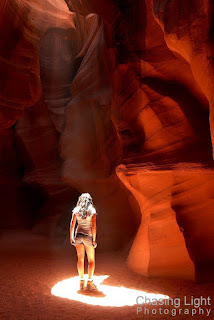

The Allure of Caverns

Image
Gnostics say that experience and seeing, and absorbing what you see and experience, is far more important than formal study and education. It has something to do with nature – being close to the earth – and the natural wisdom of intuition that has all but been purged from our senses. It is the musky scent of Sophia and the deep feminine, of damp soil, dark caves and wombs, and of the fertility rites of the old pagan ways when "God was a Woman." – from The Mystery of Being Alive , my essay of January 7, 2009 When I was a teenager a few of my friends and I would occasionally take the latest feminine objects of our desires to a cave system called the Tongue River cave west of Dayton, Wyoming, to seduce them, for there is something sensual – even erotic -- about penetrating deep into the dark, damp, yet pleasantly pungent, atmosphere of a cavern where even the most prissy and proper of our young ladies soon succumbed to the passion of her natural sexuality. We didn't under...

Mother

Image
As the years wear on I find myself, more and more frequently, looking back over my long life with conflicting and alternating mixtures of quiet comfort and satisfaction, unsettling regret and remorse, and nostalgic memories of all that has gone before. Though I seldom dwell on the past for long, I often pull incidents, places, people, and things through the cobwebs of my mind for use in my writing. For a writer, drawing from personal experiences is the most valuable reference library there is. From time to time I consider the influences of the roles that others have played in the shaping of my life – the significance of my father, mother, and siblings, for instance. It took me decades to realize that my mother had more influence on the character of my mind and my personality than my father did. My father was a here and now kind of person, and he was a friend and companion more than a father, for we spent years fishing, hunting, and exploring together when I was a kid – all the while i...

The Mystery of Being Alive

Paulo Coelho, in his most recent Warrior of the Light issue, listed an Inventory of Normality , which includes 47 items about what society considers to be normal behavior in everyday life these days. As he points out, all of these situations are absurd, but two in particular caught my eye, for they profoundly illustrate how utterly lacking we are in our search for knowledge about 1) who we really are and why – a search that should be the primary goal in life of each and every one of us – and how we are conditioned (actually brainwashed) by the patriarchy to 2) believe that our own personal religion is the unconditional, inalienable, Truth – and that you are dead wrong about yours. The first item that struck me this way was this one: 9] Comparing objects like cars, houses and clothes, and defining life according to these comparisons instead of really trying to find out the true reason for being alive. In my essay Looking for Felicity on this blog, Paulo explains that this same situa...

Wild Gnosis

When I began to look deeply into Gnosticism – particularly Sophian Gnosticism – I found that underlying all the intellectual, spiritual and religious works and studies, the ecclesiastical rituals and ceremonies, the Eucharist, or all the aspects of the Bridal Chamber, there is a profound simplicity to the entire concept of its existence. Tau Rosamonde Miller of the Church of Gnosis explains it this way: "Gnosticism is better understood through art, music, and poetry and not through intellectual pursuit . . . . It is better understood in terms of Buddhism than of Christianity. I find that one of the simplest, truest ways of describing the experience of Gnosis is found in the lines of the Tao Te Ching, 'The Tao that can be told is not the eternal Tao.' Just substitute "Gnosis" instead of "Tao". In this instance the terms can be interchangeable." But the simplicity of Gnosticism might best be understood by the term Wild Gnosis . The concept of Wild G...

The Lonesome Land

My uncle, Albert Pendergraft, committed suicide in 1944, apparently from a longtime overdose of alcohol and depression. He blew his head off with an S&W .38 Special revolver. Born just three years before his death, I have no recall of the event, but Albert, no doubt unintentionally, left a life-long gift for me – or for anyone else who cared to partake of it for what it was. So far as I know I am the only one who did, though my older brother may have. The gift was what I believe was his suicide note – a poem of love for the land he roamed that depicted a key part of the philosophy of his lonesome life. For several years late in his life he was a ditch rider. For sure, he was a recluse: he had great love for Gaia, but little love for his fellow man or their gods. Albert was born on a remote ranch in Johnson County, Wyoming, in 1894, just four years after Wyoming became a part of the United States. The son of a Texas Trail cowboy, he spoke so seldom that he became known as Silent Al ...

What Baby Thinks

The following discourse, from my novel manuscript Moon Shadows: the Revelation , in edit, is a precocious girl's heartfelt address to an eclectic group of goddesses, humans, and aliens ensconced on a Wyoming ranch, who are engaged in an effort to overthrow and reconstruct the United States government and its constitution and laws. The little rebel is trying to express her discomfort with the prejudices, the oppression, the malicious overreaching and power mongering of patriarchal authority prevalent in the existing governance. Her statement is a simple essay on human values of good and evil, right and wrong, justice and injustice, and whether we humans know who we are and where we're going. The group is at a party – an outdoor dinner and dance with a western theme featuring live music from the Alabama band, which has just taken a break, and the raucous, somewhat inebriated, crowd has fervently implored her to speak to them, having been highly amused by her previous nationally t...

Looking for Felicity

We are born into this world with no expectations, no hopes, no desires, except a certain hunger and the innate desire to survive – with perhaps a related fear. We are not conscious even of our own existence. As our brain becomes active, receiving, perceiving, we gradually become aware of ourselves and the plethora of the world around us, and our mindless innocence (the remnants of bliss?) begins to fade away, replaced with the first archons who will rule our lives from then on. Because of the archons, we will search in vain during the span of our earthly lives for happiness, repeatedly deluding ourselves into believing we've found it, only to realize, sooner or later, that we were wrong. It is, I believe, impossible for the human being, as we exist in this world, to find true felicity. And anyone who makes the claim that he is truly happy, is a liar living in one of those delusional states of denial. We can find love, but we can never find felicity, a term partly derived from, or a...

Muses About Muses

When I was in high school – my junior year, I believe -- I had a spirited young French English teacher. I can't recall her name these days, but she was thin and graceful – pretty and provocative. In class I would daydream about dating her, or of making love to her, and I remember wishing I was older or she was younger. She liked me; I knew that. And she knew I liked her, too. While I daydreamed I would often compose little poems in my notebook or on the back of a theme book. I never thought about what I wrote, barely aware that I was writing at all – kind of like doodling, I suppose. In my mind, she probably thought I was taking notes, though I should have known better. There was a girl who sat behind me every day, who was an excellent student of English and literature, and though I don't remember her name either, I liked her quite a bit, too. Whenever the French English teacher would say something poignant, the girl would lightly touch the back of my neck in a sensual way, the...

Chaos & Order: What Has Sophia Done for You Today?

In prison, one of the novels I wrote ( Mansions of the Moon: the Recluse ) ends like this (in part) -- after 1,088 hand-written pages and 272 thousand words leading up to a seemingly anticlimactic conclusion: . . . Were we playing the animal farm game? Was it necessary to kill and sacrifice in order to nurture and love? . . . Perhaps only Jeannie had understood it all, for she had said long ago that our struggle is not about good and evil but rather the preservation and renewal of life, including saving Gaia . . . . She was talking about creation and sustaining life and the earth in our own universe, I suppose. The struggle would go on forever; I knew that implicitly now, for infinity is as infinity does, and the will to procreate -- or to create -- can never stop, since all universes must expand forever. Once the tiny spark of creation began there could be no turning back, for creation breeds creation without consideration or reflection, but rather solely in the name of existence. The...

Thoughts on the Art of Creation: the Power of Sexuality in the Cosmos

Blogger's Note: This essay is adapted from the introduction to Mansions of the Moon: the Recluse , a novel in the throes of editing, by Albert Lloyd Williams. In the cosmos there is nothing more important than universal expansion born of never-ending procreation coupled with the eternal survival of that already created, for progressive creation is the ultimate power possessed by all living organisms. Every life form, on earth at least, is driven instinctively to create and nurture life of its own kind, and when all is said and done sexual union and procreation is the path that provides the way to eternal life and the divine honor of having created vital new life. Each life form intuitively strives toward perfection and the final reward of divine empowerment: the consummate sexual union between transcendent gods and goddesses, eternally united as one, creating the androgynous power of pure Consciousness. All life has within it the innate sexual drive to preserve and renew its own s...

Greetings from an Old Recluse

Hello . . . Before I die sometime in the next decade or two I want to get a few things off my chest, and I thought some obscure blogsite might provide a platform (read or unread doesn't matter much) to put my thoughts, beliefs, opinions, attitudes, prejudices, jealousies, anxieties, gripes, and so forth, in order -- at least for my own edification and comfort. Hopefully a few of you out there will respond with insights and thoughts of your own that I might benefit from and take to heart to strengthen my own soul, too. That would make this blog a forum, maybe, and that would be good. The thing is, I'm not very comfortable with the world -- especially with us human beings and how we interact with the rest of it -- and I'd like to blather on a bit about that in this blog. Again, it doesn't really make much difference whether anyone bothers to listen; at least it's therapy for me. And the good thing is that I don't have to stand up before any of you to expound (or ...