Posts

Showing posts with the label gnosis

Sophia: The Lost Goddess

My Dear Immortal Goddess, I have a vision of you: You, like Inanna, Ishtar, Astarte, Isis, and Mary Magdalene, among others, are Sophia's divine incarnate daughter, and you have a mission to fulfill with Gaia before you leave her. Yes, for now you are an immanent sacred body, not yet again a transcendent soul. But you will ttanscend once more when your immanent presence is no longer necessarily on Gaia's earth. . . Our own two souls, I believe, were once, long eons ago, before the fall of souls, united in love as one according to the laws of the Union of Opposites and the bridal chamber of the hieros gamos. By her divine providence, Sophia has brought us together once more. If we are reunited in this earthly life, you and I can regain the Pleroma together and serve Sophia and the Logos forever in the peace and love of felicity. I remain your loving and devoted disciple, mentor, and soulmate. With Love and Hope for Earthly Felicity for All ~llaw Sophia's first instance...
Mysticism vs. Materialism

"... the great materialistic progress which we have venerated for so long is on the verge of bankruptcy. We can no longer believe that we are born into this world to accumulate wealth and abandon ourselves to mortal pleasures. We see the dangers and realize that we have been exploited for centuries. We were told the twentieth century was the most progressive that the world has ever known, but unfortunately the progression was in the direction of self-destruction." - Manly Palmer Hall Today is the birthday of Manly Palmer Hall (1901–1990), a Canadian philosopher, scholar, and mystic whose prolific works included the remarkable volume The Secret Teachings of All Ages , from which I offer this quote for your contemplation: "Philosophy bestows life in that it reveals the dignity and purpose of living. Materiality bestows death in that it benumbs or clouds those faculties of the human soul, which should be responsive to the enlivening impulses of creative thought and ennoblin...

The Allure of Caverns

Image
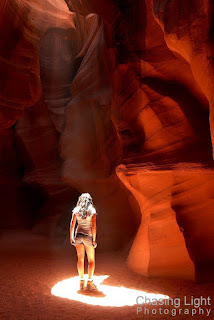
Gnostics say that experience and seeing, and absorbing what you see and experience, is far more important than formal study and education. It has something to do with nature – being close to the earth – and the natural wisdom of intuition that has all but been purged from our senses. It is the musky scent of Sophia and the deep feminine, of damp soil, dark caves and wombs, and of the fertility rites of the old pagan ways when "God was a Woman." – from The Mystery of Being Alive , my essay of January 7, 2009 When I was a teenager a few of my friends and I would occasionally take the latest feminine objects of our desires to a cave system called the Tongue River cave west of Dayton, Wyoming, to seduce them, for there is something sensual – even erotic -- about penetrating deep into the dark, damp, yet pleasantly pungent, atmosphere of a cavern where even the most prissy and proper of our young ladies soon succumbed to the passion of her natural sexuality. We didn't under...

My Zahir

Though I've eulogized her, made references about her, and written poems to her in this blog, I've never told anyone – not even her – exactly what makes her so overwhelmingly attractive to me that my obsession over her borders on madness or maybe holiness, or so the story goes. . . . In numerous essays I've written about my Zahir (I capitalize zahir because she is my own personal zahir), but I've never discussed the feminine wiles and attributes that attract me to her so obsessively. This, then, is all about her, and why she consumes every thought I have, every breath I take. In my time-jaded, yet discerning, eyes she is the most exquisitely attractive image on the face of the planet. Whoever agrees or doesn't doesn't matter at all to me, for I love her unconditionally. Every man's obsession is his alone, and my Zahir is mine. She is a bit taller than average, and thin: five-eight, maybe, and 120 pounds with her boots on. She has small breasts, long legs, a ...

Emotions: Conflictions of the Soul

Much of basic psychology today instructs us to beat down our negative emotions by " getting out of our minds and into our lives ." It is called acceptance and commitment therapy. Certainly such advice can be valuable to those of us who are living lives full of what psychologists call the "negative self-scripts", or influence emotions, that we generate from feelings of low self-esteem, guilt, self-consciousness, and feelings of inferiority. To overcome these negative self-scripts we are instructed to develop "self core skills" with mindful self-scripts based on affirmation, assertion, focusing, humanizing, and tension-sensing to rationalize and diminish the debilitating negative emotions we all live with. We are to use the polarity of our two basic kinds of emotions -- innate emotions and influence emotions -- to wage a war between our soul and our mind to keep us on the straight and narrow. There is something of "wild gnosis " in this kind of psy...

The Mystery of Being Alive

Paulo Coelho, in his most recent Warrior of the Light issue, listed an Inventory of Normality , which includes 47 items about what society considers to be normal behavior in everyday life these days. As he points out, all of these situations are absurd, but two in particular caught my eye, for they profoundly illustrate how utterly lacking we are in our search for knowledge about 1) who we really are and why – a search that should be the primary goal in life of each and every one of us – and how we are conditioned (actually brainwashed) by the patriarchy to 2) believe that our own personal religion is the unconditional, inalienable, Truth – and that you are dead wrong about yours. The first item that struck me this way was this one: 9] Comparing objects like cars, houses and clothes, and defining life according to these comparisons instead of really trying to find out the true reason for being alive. In my essay Looking for Felicity on this blog, Paulo explains that this same situa...

The Eleusinian Mysteries: Feelings of Futility

Someone once said they won't enjoy old age because there's no future in it. More profound words were never uttered if we cannot see beyond our own lifetimes. Could it be that we live just a few decades on the face of this earth, struggling as best we can to make the most of this short time, only to fade away to nothing but whatever legacy we've left behind when we die? Do any of us really believe in our heart of hearts that that's all there is? Could it be that there is no further purpose for our existence – not so much as even some mysterious purpose beyond our human perceptions or understandings? To believe in your heart and mind that this life is all there is seems incomprehensible to me. If you are in touch with your own soul, you intuitively know there is more. In previous essays I've discussed the pleroma, hierosgamos, the union of opposites, the bridal chamber, the esoteric knowledge of the Gnostics, pagan myths and their relationship to modern day religious ...

Hierosgamos: Love from the Soul

Hierosgamos may be generally defined as an overt spiritual or sacred act of physical sexual intercourse between a deity and a man or woman for the purpose of gaining divinity for the human partner. Symbolically, the celebration of the Eucharist is the same thing. In ancient Sumeria, for instance, a hierodule participating in the act with a god became a deity of the goddess Inanna in the same manner as the taking of bread and wine represents the body and blood of Jesus Christ in the Eucharist communion today. The roots of this ancient act run deep even today in some religious and neopagan cults, but the fact that it is also ritualized in many Christian faiths, particularly the Roman Catholic Church, seems to indicate that the myth of copulation between gods or goddesses and human beings is based in physical reality. Read no further into the Holy Bible than the 6th chapter of Genesis and you will find that sons of god marry daughters of men: "And it came to pass, when men began to...

Wild Gnosis

When I began to look deeply into Gnosticism – particularly Sophian Gnosticism – I found that underlying all the intellectual, spiritual and religious works and studies, the ecclesiastical rituals and ceremonies, the Eucharist, or all the aspects of the Bridal Chamber, there is a profound simplicity to the entire concept of its existence. Tau Rosamonde Miller of the Church of Gnosis explains it this way: "Gnosticism is better understood through art, music, and poetry and not through intellectual pursuit . . . . It is better understood in terms of Buddhism than of Christianity. I find that one of the simplest, truest ways of describing the experience of Gnosis is found in the lines of the Tao Te Ching, 'The Tao that can be told is not the eternal Tao.' Just substitute "Gnosis" instead of "Tao". In this instance the terms can be interchangeable." But the simplicity of Gnosticism might best be understood by the term Wild Gnosis . The concept of Wild G...

After Prison: Reclaiming the Lost Soul into Holiness or Madness

In my September 30 essay, Muses About Muses , I touched on my new Muse – a woman who stole my heart and rekindled in me some of the confidence and zest for life that I'd lost while I was incarcerated. Prison existence destroys the ego, takes one's pride and confidence away, and leaves one with nothing but fear and self-loathing. The correctional system is designed to break one down to little more than a plasmatic puddle of subservient humility and self-pity. Perhaps this is what some public offenders need in order to re-enter society successfully, but in my own case the descent into useless oblivion was devastating to my sense of well-being and self-assurance. I trusted no one – not even myself – and I was angry and bitter toward any kind of authority or guidance. Shortly after my release from prison an employment counselor assigned to my case interviewed me briefly, looked over my impressive resume, and laughed derisively. "All I see here is all about you, you, you,"...

The Never-ending Story

During nearly three years in the Nevada state prison, I completed six handwritten manuscript drafts of novels, and had begun a seventh prior to my release on parole in June, 2007. While in prison I was not allowed to draft the books on electronic media, which I am now in the process of doing. They are large manuscripts (more than 250 thousand words each) and still require several iterations of editing to condense and organize to publishable construct, and some research remains that could not be done in prison. Six of the novels comprise an anthology that I call “ Sophy’s Way: Parallel Worlds of the Moon ” in reference and reverence to the lost goddess Sophia, the Goddess of Wisdom, whose essence and presence saved my life and, yes, my very soul from certain death during my prison time. The underlying theme of the novels concerns man’s inherent cruel and duplicitous nature, but primarily the books deal with the lost intimate relationship between immanent sexuality and transcendent divin...

What Baby Thinks

The following discourse, from my novel manuscript Moon Shadows: the Revelation , in edit, is a precocious girl's heartfelt address to an eclectic group of goddesses, humans, and aliens ensconced on a Wyoming ranch, who are engaged in an effort to overthrow and reconstruct the United States government and its constitution and laws. The little rebel is trying to express her discomfort with the prejudices, the oppression, the malicious overreaching and power mongering of patriarchal authority prevalent in the existing governance. Her statement is a simple essay on human values of good and evil, right and wrong, justice and injustice, and whether we humans know who we are and where we're going. The group is at a party – an outdoor dinner and dance with a western theme featuring live music from the Alabama band, which has just taken a break, and the raucous, somewhat inebriated, crowd has fervently implored her to speak to them, having been highly amused by her previous nationally t...